
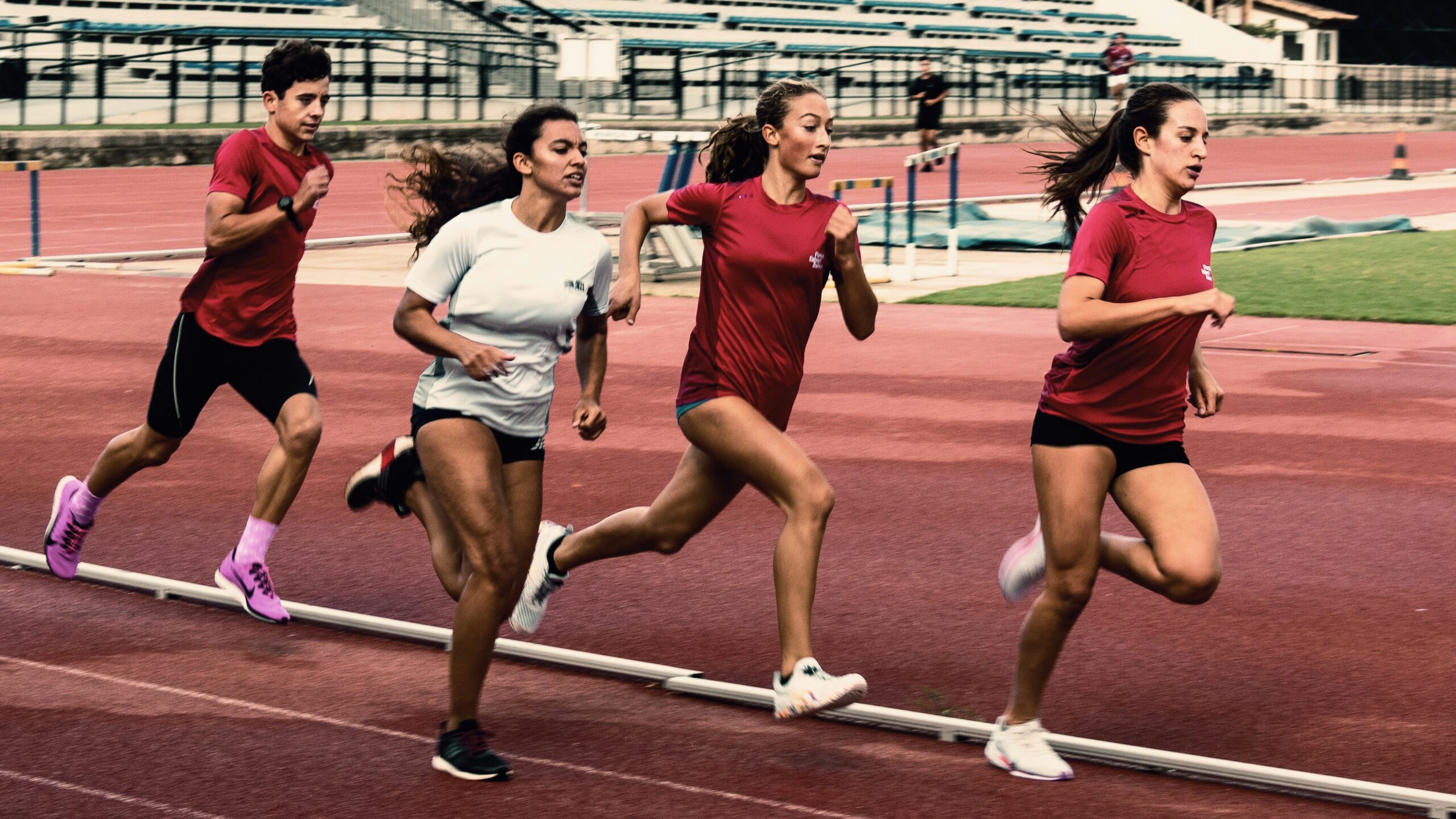
Why athletic mindsets build powerful female leaders, and what organizations can learn from it.
If you want more women in leadership, the answer might not start in the boardroom.
It might start on the field.
Because when you look closely at the backgrounds of many of today’s most successful female leaders, a pattern begins to emerge – one that is too consistent to ignore.
A landmark study by EY and espnW found that 94% of women in C-suite positions played a sport at some point in their lives, with over half competing at a collegiate level. More recent research shows that 85% of women leaders who played a sport believe those experiences directly contributed to their professional success.
This isn’t coincidence. It’s a pipeline.
And yet, it’s one that organizations rarely acknowledge, let alone intentionally build upon.
Sports as a Leadership Training Ground
We often think of leadership as something developed later in life. Through experience, training programs, or career progression.
But for many women, leadership begins much earlier. It begins in environments where:
In other words, sports.
For me, sports wasn’t just a pastime, it was my first leadership training ground.
I didn’t just experience this as a player, but also through being selected as captain. That shift brought a different level of responsibility. Not just for my own performance, but for the team around me. It meant learning how to bring people together, how to lead in moments of pressure, and how to navigate both success and setbacks with others looking to you for direction.
Every training session required discipline. Every match demanded focus. Every loss forced reflection. Every win required humility and collective effort.
Those experiences didn’t just build skills, they shaped how I think, how I respond under pressure and how I lead today.
And that’s the part we often underestimate.
Sports doesn’t just teach you what to do. It shapes who you become.
The Leadership Traits Sport Develops
The connection between sport and leadership become clearer when you break down the capabilities required in both environments.
These are not ”nice to have” skills. They are the foundations of effective leadership.
The Drop-Off We Don’t Talk About
If sports is such a powerful leadership pipeline for women, there’s a critical question we need to ask:
Why do so many girls leave sports before they ever fully experience its benefits?
Research consistently shows a significant drop-off in participation by the age of 14, just as girls enter adolescence. This isn’t because interest disappears overnight. It’s often because the environment stops working for them.
At this stage, many girls face:
These are not ”nice to have” skills. They are the foundations of effective leadership.
In short, systems that were not designed with them in mind.
When that happens, girls don’t just leave sport – they lose access to one of the most powerful environments for developing confidence, resilience and leadership capability.
And if we connect that back to the data, to the 94% of women leaders who once played sport, the implication is clear:
We are losing future leaders far earlier than we realize.
Why This Matters for Women in Leadership
Despite progress, many women still face barriers in leadership. From confidence gaps to systemic bias.
Sports can play a critical role in counteracting these challenges by providing:
But only if girls stay in the system long enough to benefit from it.
This is where intention matters.
If we want sport to be a true leadership pipeline, we need to design environments that support girls through key transition moments, not lose them at them.
What Needs to Change
Keeping girls in sport isn’t just about participation – it’s about designing better environments.
That means:
Because when the system changes, participation changes. And when participation changes, leadership pipelines change.
Bridging Sport, Business and Leadership
At Bia Mindset, this intersection is at the heart of what we do.
We see firsthand how the principles of sports: resilience, adaptability, performance under pressure – translate into business and leadership environments.
But we also see the opportunity to go further.
Not just to transfer lessons from sports into business, but to improve the systems that develop those leaders in the first place.
Because whether you’re on the field or in the boardroom, performance is shaped by the environment you operate in.
And the most effective environments are those designed with intention.
Bringing It All Together
The boardroom and the sports field might seem like very different arenas. But in reality, they demand many of the same qualities.
For women, sports often provide the first opportunity to develop those qualities, to test them, refine them and build confidence in them.
The opportunity now is not just to recognize that connection, but to strengthen it. To ensure that more girls stay in sport. To design environments that support them through key moments of change.
And to treat sport not just as participation, but as preparation for leadership.
So, here’s something worth reflecting on:
If sport is one of the most powerful environments for developing future female leaders, what role can you play in ensuring more girls stay in the game?


